History of the Mills House
By Suzanne Huntzinger

By Suzanne Huntzinger
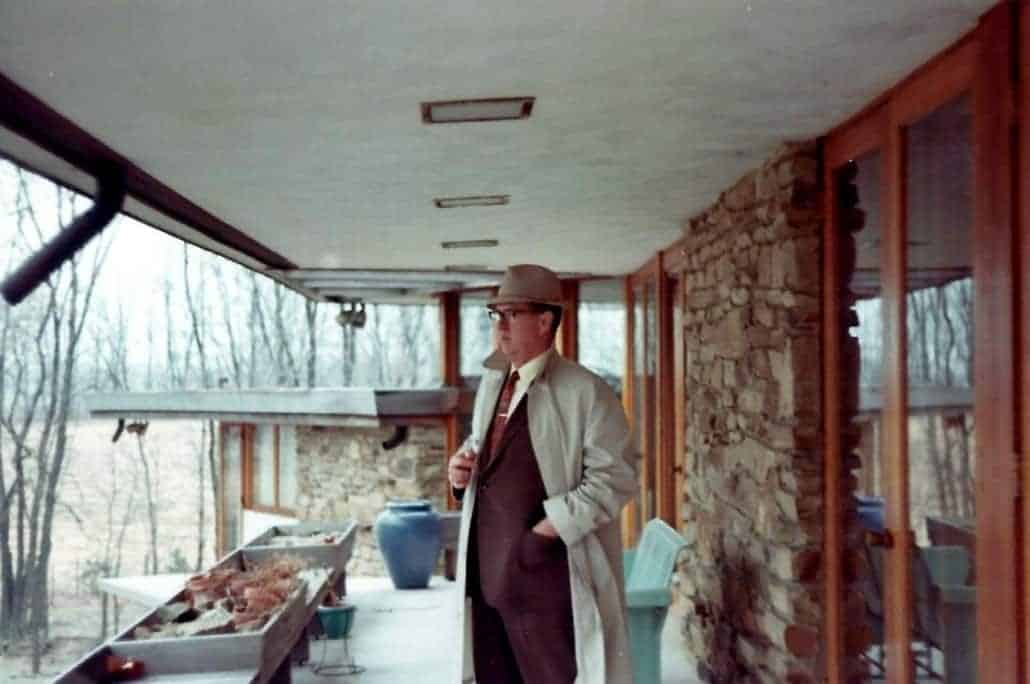
Ernie Mills
In 1955, businessman Ernie Mills purchased the plot of land at 944 Fry Road with a dream in mind. Mills owned Monarch Cabinet Company, “Tops in Tops,” a cabinet and countertop business, and his goal was to build a home showcasing his products. A long-time fan of Frank Lloyd Wright’s work, Mills wanted to model his home in Wright’s classic Usonian style.
Ensuring his goal would be accomplished, Mills traveled to the famed architect’s home in Wisconsin on several occasions to discuss ideas for the home’s design. He even fashioned models out of balsa wood to give Frank Lloyd Wright a more realistic picture of what he had in mind. Finally, when Mills settled on a final design, it was time to break ground.
The home was to become an icon for mid-century modern architecture. In keeping with the style, Mills planned a flat roof with cantilevered overhangs and clerestory windows. He also planned lush gardens and elaborate landscaping to create a peaceful setting among nature.

Harry Cooler
While Frank Lloyd Wright lent valuable input on the design of the home, Mills needed a local architect to draw the blueprints and turn his model into workable plans. So, he went on the hunt for the perfect architect to carry off the construction of this dream home. Serendipitously, he was connected to up and coming architect, Harry Cooler. Cooler was just getting started making a name for himself in the industry. But he came highly recommended enough to pique Mills’ interest. When he learned that Cooler graduated from the University of Illinois and studied under Frank Lloyd Wright, those were just the magic words Mills needed to be convinced that Cooler would execute his vision for the home masterfully. The budding architect would later go on to complete several high-profile projects like the Burger Chef design and the administration building at the Weir Cook Airport.
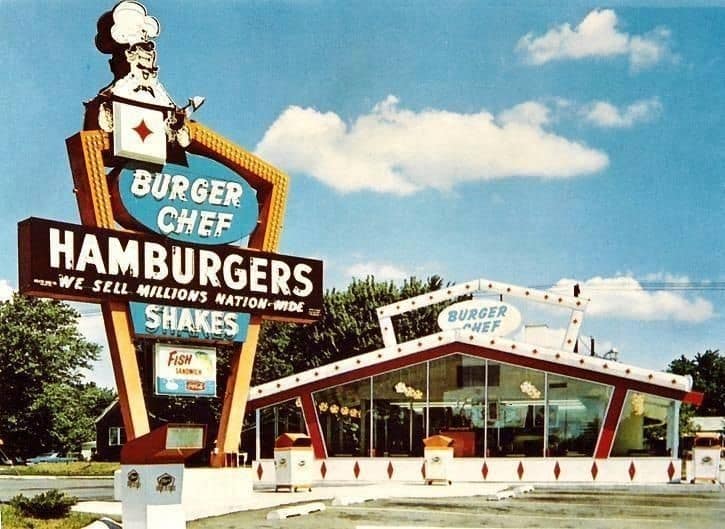
Harry Cooler’s Original Burger Chef Design
During construction, Mills and his wife Edith, along with their daughter Susan (Susie), would come to the property to clear the brush. During those early visits, the family noticed a gentle breeze coming from the south, and that’s how the home earned its first nickname, Southwind. The family also made trips to Brown County in their Chrysler New Yorker and hauled natural stone to wrap the house. The stone wrap was yet another feature carrying out Mills’ vision of accentuating nature.
Construction was complete on the home in 1956 and the Mills family finally moved into their dream home. The tri-level mid-century modern showplace stood out not just for its unique exterior. True to his word, Mills decked the house with all the greatest modern features, many of which were way ahead of its time. Copper tubing heated the home and it was air conditioned – a luxury in that age. Modern appliances adorned the kitchen, wrapped by countertops and cabinets from Monarch Cabinet Company. Contemporary furniture, yet homey, filled the home, as did green bathroom fixtures.
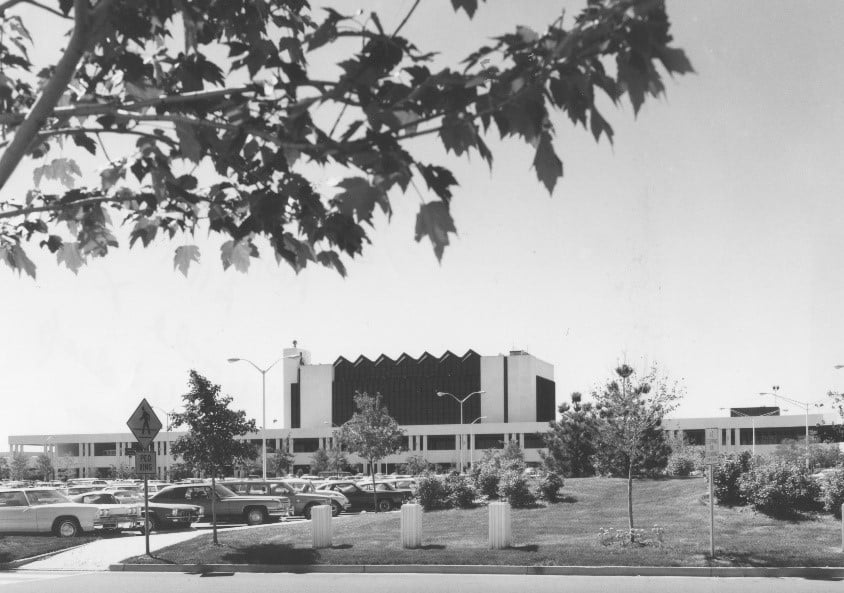
Harry Cooler’s famous waffle roof design at Indianapolis Weir Cook Airport
Through the years, the Mills and their home played host to dozens of gatherings. Mrs. Mills threw many parties for Susan’s school friends, bridal showers, parties for Ernie’s Duesenberg club. Edith even hosted a dinner party for Fred and Augie Duesenberg’s mother. Susan’s wedding reception was also held at the house and was quite a memorable event.
After many years and beautiful memories, the Mills family sold the home. Two other families lived in the home, and the final owner converted it to a law firm. After the law firm closed, the home fell into disrepair. No attention was given to the badly deteriorating roof, ruined by years of water collecting, unable to drain from the flat surface. The landscaping became overgrown and unruly.
Light was dimming on the once grand structure, an icon of its era and beacon to all who lived in the community. Filled with memories, the home continued to draw looks as locals drove past hopelessly wishing they’d see a for sale sign so someone would buy the home and give it the attention it deserved. Sadly, the Indiana Historical Landmarks Society put the home on its ten most endangered list, hoping to prevent a total erasure of history for the simple and idyllic era, beautiful architecture and the connections made outside and within its four walls.
After years of falling into a state of disrepair, the home and its surrounding grounds, have been meticulously restored to their original glory. In January of 2026 One Mission Society took ownership of the property and will weave the property into its existing 34-acre campus that sits just across the street.